
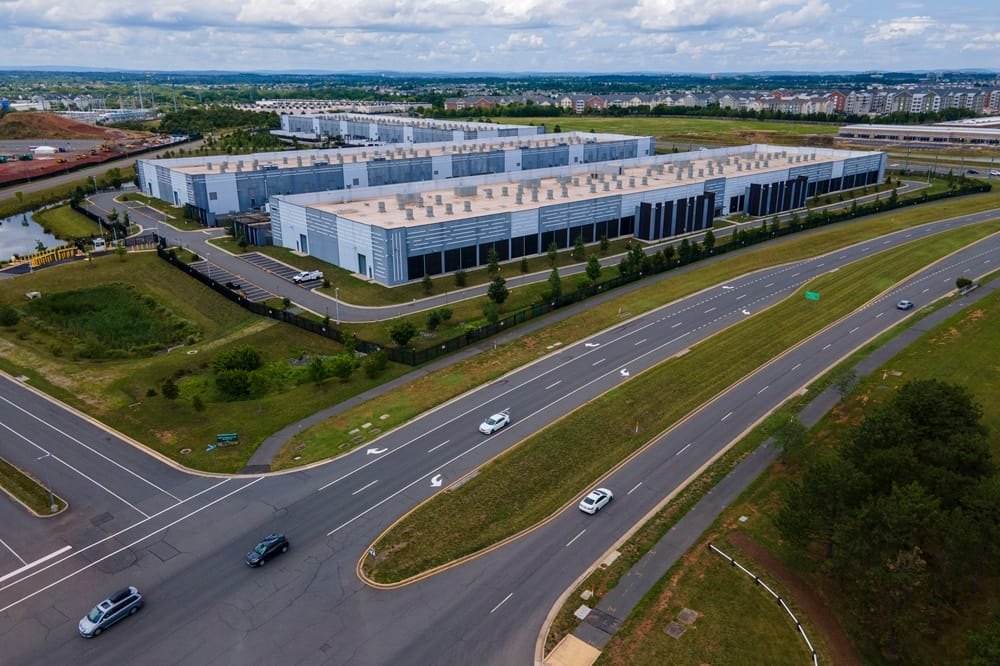
Virginia's data center boom is causing the depletion of a critical aquifer in the state's eastern coastal plain, and regulators need new power to reject industrial water withdrawal permits, according to a state study released Thursday.
The study's focus area is eastern Virginia's coastal plain, not the Dulles corridor. Most data centers along the Dulles Toll Road, the global epicenter of data center density, draw from surface water rather than groundwater. But the report's recommendation to give regulators power to reject industrial water permits could affect future data center proposals statewide, including in the Reston and Ashburn corridor where 371 facilities already operate and 438 more are planned, according to industry research firm Cleanview as cited in the Associated Press report.
The Department of Environmental Quality study, which Gov. Abigail Spanberger's (D) office called "the most comprehensive analysis of groundwater resources conducted in Virginia history," had been withheld for more than six months past its January due date.
Jack Bledsoe, a spokesperson for Spanberger, attributed the holdup to a backlog of items from the previous governor's administration. He said Spanberger is committed to working with the General Assembly to evaluate the findings and strengthen groundwater management policies.
The report's central conclusion is blunt: groundwater in eastern Virginia "is constrained, and current projections indicate declining availability in the near future." It found that a data center using evaporative cooling technology likely cannot find a reliable groundwater supply anywhere in the region.
The study traces a pattern. Groundwater withdrawals in eastern Virginia dropped sharply about 15 years ago after a paper mill closed, allowing aquifer levels to recover. That recovery has stalled, and levels are projected to resume declining. There likely isn't enough groundwater to sustainably add any big, new industrial user in the region.
State Sen. Richard Stuart (R-Northern Neck) pushed the legislation requiring the study after raising groundwater concerns for 15 years. Local governments in his district are already being told by regulators to shift to surface water sources.
"I'm worried about our citizens having drinking water, and I'm worried about our seafood industry because they need clean water," Stuart said Saturday.
The report recommends the General Assembly strengthen regulators' permitting authority to reject industrial withdrawals, require large-volume applicants to first examine surface water or water reuse, improve local water-use planning and increase funding for water management staff and equipment.
A separate law, SB553, took effect in January 2026 and requires water providers to report how much water they supply to data centers, giving the public a clearer picture of the industry's consumption.
Jay Ford, the Chesapeake Bay Foundation's Virginia policy manager, reviewed the report and described its findings as sobering. "We're standing on the ledge," Ford said.



.jpg)