
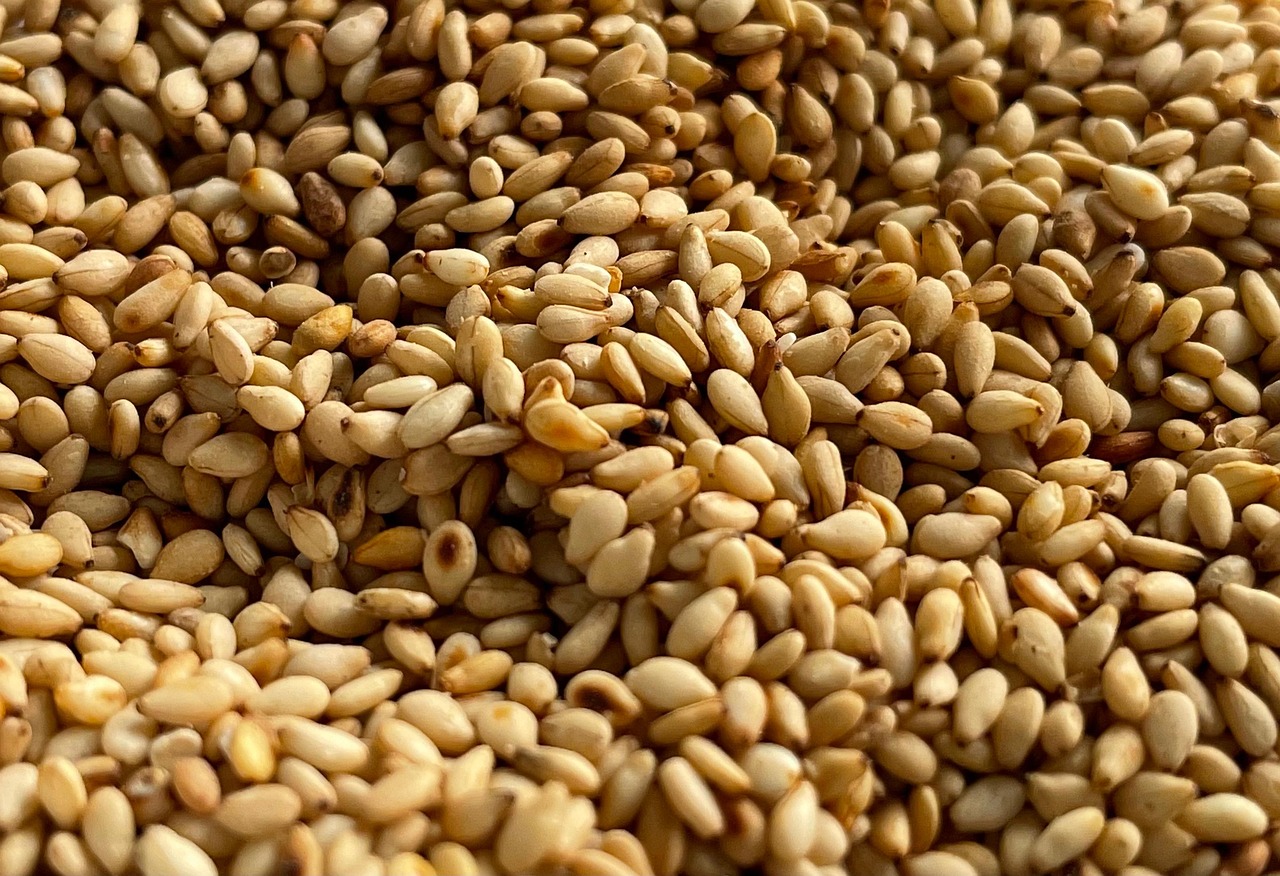
Every restaurant, food truck and vendor in Reston must disclose sesame as a major food allergen under updated Virginia health regulations that took effect Thursday, Sept. 10.
The Virginia Department of Health added sesame to the state's required allergen list, joining eight other items: fin fish, crustacean shellfish, tree nuts, milk, peanuts, soy, wheat and eggs. The change, first reported by the Virginia Mercury, means food establishments must flag sesame in both packaged and unpackaged items for customers.
Restaurants do not have to reprint menus. A standalone handout or QR code linking to allergen information satisfies the requirement.
The update ends a five-year gap since Virginia's last food code revision in 2021, according to WRIC. That earlier version aligned with the 2017 FDA Food Code. The new rules reflect the 2022 federal code. The FDA designated sesame as the ninth major food allergen in April 2024.
VDH communications manager Brookie Crawford told the Virginia Mercury that adopting federal updates takes time because they "must go through an executive branch review and then to the General Assembly."
The regulations also expand duties for the Person in Charge (PIC) at each food establishment, who must oversee employee allergen-awareness training. That includes ensuring staff monitor correct temperatures for time and temperature control for safety foods during thawing.
Two new Virginia laws will add multilingual requirements. House Bill 373, sponsored by Del. Marty Martinez (D-Loudoun), and Senate Bill 248, sponsored by Sen. Kannan Srinivasan (D-Loudoun), will require VDH to post allergen guidance in multiple languages for restaurant staff.
Restaurants will also need to display signage or update menus with the phrase "if you have a food allergy, please notify us" in multiple languages. VDH has not announced a date for those requirements to take effect.
A separate law, Senate Bill 183, sponsored by Sen. Angelia Williams Graves (D-Norfolk), requires restaurants to place an identifying marker on carry-out and delivery items altered for allergy or sensitivity reasons. That law took effect July 1, but VDH said the implementing regulations will not be ready until 2027.
Crawford said agency staff are working on proposed regulations and plan to convene a public stakeholder group to gather feedback.
The VDH food regulations update page includes a training video for food establishment operators preparing for the changes.



.jpg)