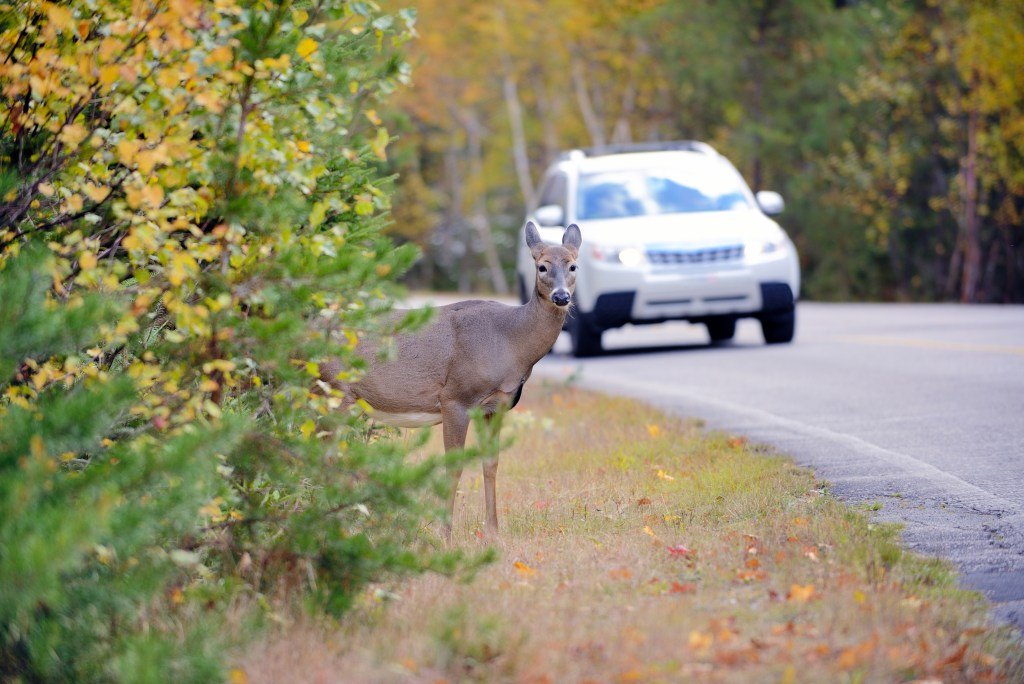
Reston-area drivers face elevated risk of hitting a deer over the next three months, the Fairfax County Police Department warned in a fall advisory posted Tuesday, Oct. 6.
More than half of the county's annual deer-vehicle crashes occur during October, November and December, the department said. Fall is breeding season, making deer more active and unpredictable on local roads. Lake Fairfax in Reston is among more than 100 properties in the county's deer management archery program, which runs through Saturday, Feb. 13, 2027.
Reported deer crashes in Fairfax County have been climbing, rising from 75 in 2021 to 105 in 2025, according to an August county deer management presentation reported by FFXnow. The FCPD advisory described "hundreds" of reportable accidents annually, though that figure may reflect a broader counting method than the yearly totals. Four deer-vehicle crashes in the county have been fatal since 1993.
Virginia ranked ninth nationally for animal-related collisions in 2025–2026, FFXnow reported, citing state data.
What to do behind the wheel
The department's top advice: slow down, but never swerve out of your lane. A collision with another vehicle or a roadside object is likely more serious than hitting a deer, the advisory stated.
Other tips from the FCPD advisory:
- Use high beams when traffic allows to spot deer sooner.
- Watch for "eye shine" along roadsides. If one deer is visible, others are likely nearby.
- If a deer is stopped in the road, slow down and flash headlights. Bright, steady lights can blind or freeze deer in place.
- Release the brake at the moment of a crash. The department said this reduces the chance of a deer coming through the windshield.
- Do not rely on hood whistles, car horns or other scare devices.
After a crash
If a deer is injured or killed, FCPD asks drivers to call the non-emergency line at 703-691-2131. If a vehicle is stuck in the roadway, turn on hazard flashers, call police and wait at a safe spot off the road.
Lake Fairfax is also scheduled for a separate sharpshooting program between November 2026 and March 2027 as part of the county's broader deer management effort.