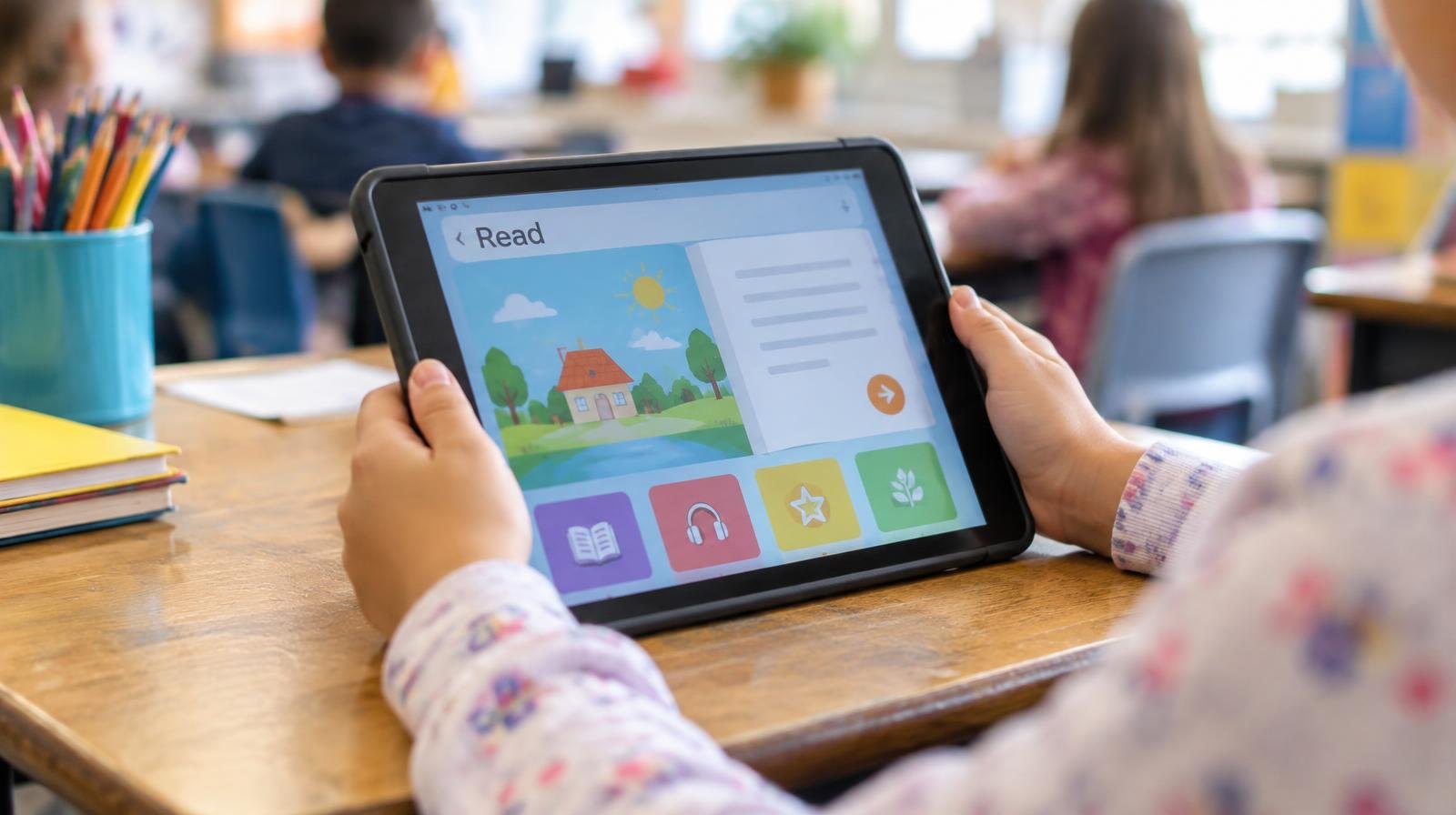
About 30% of Fairfax County kindergarteners will use the reading app Lexia during the 2026-27 school year after the school board unanimously approved an exception to its device ban.
The carve-out, approved at the board's Oct. 8 meeting, allows kindergarteners who need additional reading support to access Lexia, a literacy program approved by the Virginia Department of Education, as first reported by FFXnow. The board then unanimously directed Superintendent Michelle Reid to review the cost and effectiveness of Lexia and all other instructional apps and software, excluding basic tools like Microsoft Word and Google Suite.
The moves partially walk back a July resolution, introduced by Hunter Mill District representative Melanie Meren, that banned Fairfax County Public Schools (FCPS)-issued tablets and laptops for pre-K and kindergarten students. That ban included exceptions for students with Individualized Education Programs (IEPs), 504 plans, translation needs, or multilingual education support.
Virginia's Literacy Act requires 2.5 weekly hours of additional reading support for students who need it. FCPS already uses teacher-led instruction for about half that time but had not budgeted for additional staff to cover the rest.
Replacing Lexia entirely would require at least 20 new full-time equivalent positions across the division, FCPS staff told board members in August.
Opt-out raises equity concerns
The board also voted 8-2, with two abstentions, to direct Reid to develop a policy letting parents opt their children out of Lexia and a digital math program called ST Math.
Mason District representative Ricardy Anderson, who had voted against allowing Lexia at all, warned the opt-out could widen gaps between families. "My worry is we have parents who are in the know, who have access to resources, and they're going to jump on this opt-out if they want to reduce screen time for their students," Anderson said.
Springfield District representative Sandy Anderson called the opt-out "a logical extension" of the Lexia decision, saying it gives parents a choice for those two programs.
Meren pushes for consistency
Meren, who represents Reston-area schools on the board, expressed frustration that the technology policy keeps shifting. She urged the board to slow down and define the role of instructional technology before making more piecemeal decisions.
At the Oct. 8 meeting, Meren said she is "begging this board to slow down" and focus on answering a fundamental question: what role should instructional technology play in learning?
When Meren introduced the original device ban at the July 16 meeting, she argued screens were harming student outcomes, citing declining test scores, weaker writing skills among incoming college students and worsening mental health.
Mount Vernon District representative Mateo Dunne, who pushed for the app review, said he is concerned students spend too much time on unproven software. Franconia District representative Marcia St. John-Cunning acknowledged the Lexia exception is imperfect but said students need support now while the board works on a longer-term solution.
What Reston families should know
FCPS staff told board members that students will be evaluated for reading interventions around the end of October. Those who receive a reading plan will have it in place around mid-November.
The school system will develop a communication plan to inform families about the Lexia opt-out, though no deadline for that notification has been set. Alternatives to Lexia will vary by school, depending on staffing and how many students need reading plans. The cost of providing non-digital alternatives for families who opt out remains unknown.