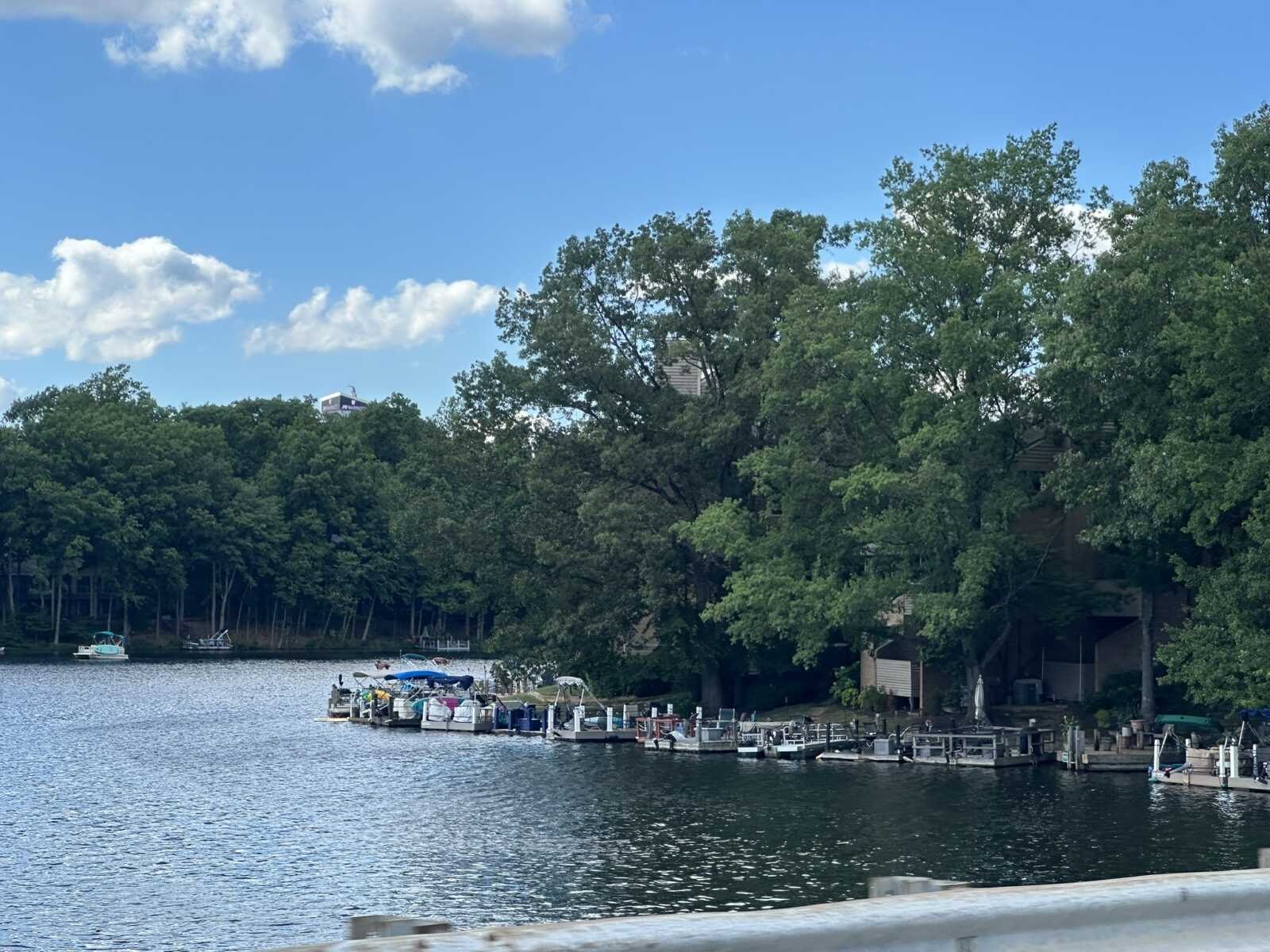
Grass carp stocked in Lake Thoreau this spring aren't keeping up with the hydrilla, so Reston Association is reaching for the herbicide.
RA Watershed Manager Ben Rhoades announced in a video released Friday that the invasive aquatic plant is regrowing at the 41-acre lake west of South Lakes Village Center. He said that RA will apply herbicide sometime in early July as part of its 2026 hydrilla management plan.
"We've noticed that our hydrilla is growing back just like last year," Rhoades said. "The grass carp that we introduced in March don't appear to be having the effect we hoped for, but we anticipated this, and in the 2026 hydrilla management plan, have a backup of herbicide use to follow."
Boating, fishing and other recreation on the lake will not be disrupted by the treatment, according to Rhoades.
Why it matters
Hydrilla is a long-stemmed invasive plant first spotted in the Potomac River in 1982. It grows rapidly, crowds out native species, and can create obstacles for boaters. RA has battled it at Lake Thoreau for years, traditionally relying on sterile grass carp to keep the plant in check.
The carp released in March have worked at RA's three other manmade lakes, Lake Anne, Lake Audubon and Lake Newport, but not at Lake Thoreau.
The 2020 lesson
The last time RA used herbicide at Lake Thoreau, in July 2020, the treatment contributed to a potentially harmful blue-green algae bloom that forced the association to warn residents away from the water. The episode drew criticism and led RA to allocate more funding for lake management in its 2021 budget.
This time, RA is treating earlier in the season. The application does follow a heat wave that produced record temperatures in the D.C. region for three consecutive days.
Rhoades said he hopes the treatment will take care of the hydrilla issue through the end of the boating season.
Timeline and context
RA stopped using herbicide in 2023, betting that mature grass carp could manage hydrilla on their own. When the plant returned in summer 2025, first as isolated specimens, then in what Rhoades called "significant quantities," RA let it die off naturally rather than risk another algae bloom.
The 2026 management plan built in herbicide as a backup from the start. RA also updated its pesticide policies in mid-June 2026 to require clearer, more prominent signage wherever treatments are applied.
RA said in a statement that its approach prioritizes integrated pest management and the least disruptive solutions first.




%20(1).webp)