
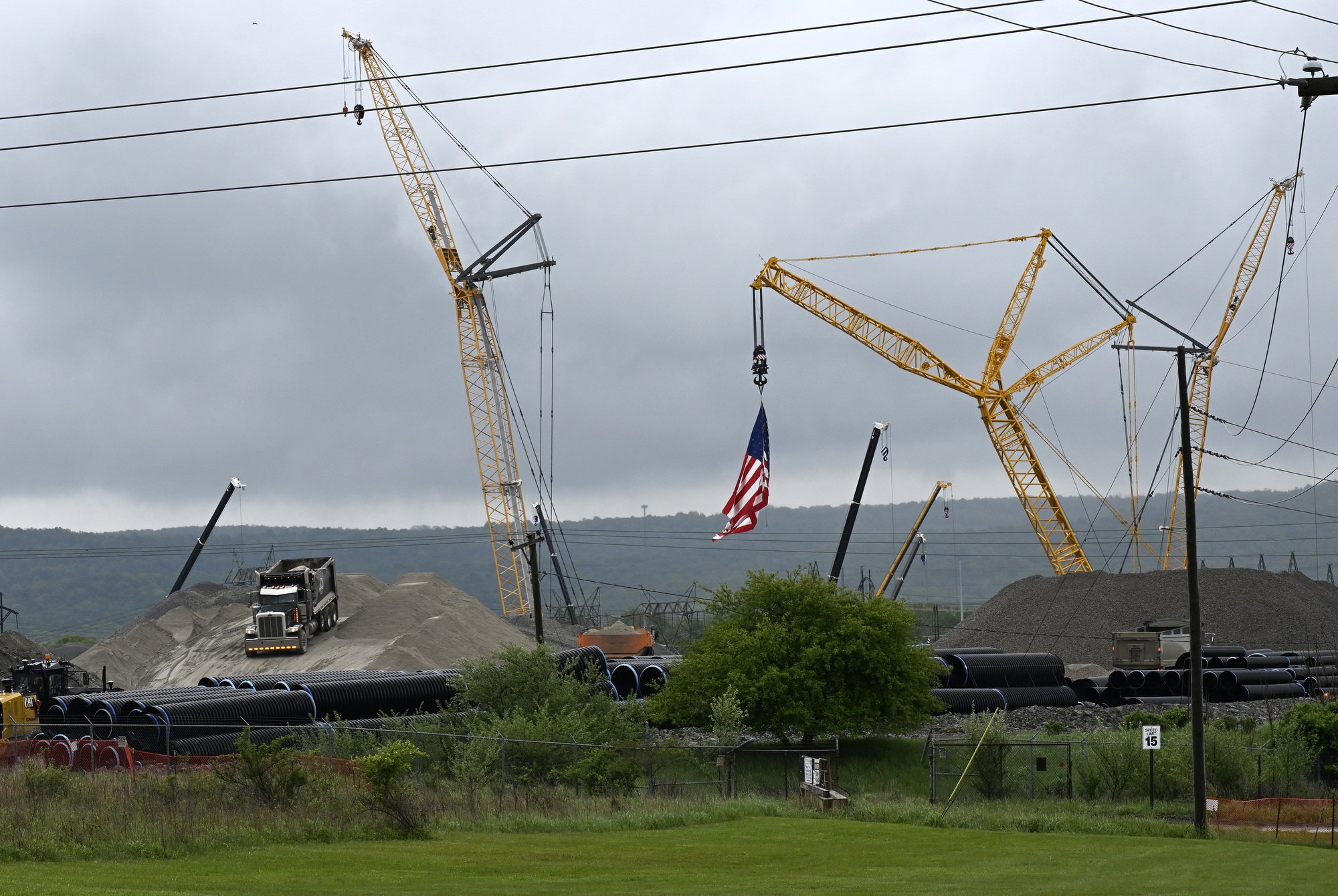
Residents living near Northern Virginia's massive data center corridor face noise levels that approach or exceed federal health guidelines.
These implications were raised by a peer-reviewed George Mason University study that has gained renewed attention as Virginia moves to regulate the industry for the first time. The paper, led by GMU PhD candidate Neha Gour and published in February in the journal Frontiers in Climate, is what its authors call the first assessment of health impacts tied specifically to data centers. It zeroes in on Virginia's Data Center Alley, the world's largest concentration of data centers, which stretches through Loudoun, Prince William, and Fairfax counties along the Dulles Toll Road corridor.
Roughly 80% of Virginia's data centers sit in those three counties. Reston, in eastern Fairfax County along the corridor, is surrounded by the buildout.
The Virginia Mercury spotlighted the study's findings on Tuesday as state lawmakers and Gov. Abigail Spanberger continue negotiating a budget deal that includes new data center taxes and directs state agencies to develop noise and water-use regulations for the first time.
Virginia's regulatory shift
Virginia lawmakers voted in June to include a new electricity consumption tax on data centers in the state budget, set at $0.011 per kilowatt-hour and capped at $600 million annually. The deal also directs agencies to develop noise standards and "data center cooling water scarcity" rules. Spanberger returned the budget with 14 amendments on June 29; the final status of the data center provisions has not been confirmed.
The Data Center Coalition called Virginia "no longer a reliable partner" after the deal was reached.
Noise tops the list
The most direct health threat the researchers identified is noise. Data centers run around the clock and produce a persistent hum between 40 and 59 decibels, according to the paper. The EPA recommends outdoor noise stay below 55 decibels averaged over a full day.
"Rapid data center expansion is happening now while the research is still emerging," Gour told the Virginia Mercury.
Long-term exposure at those levels is linked to heart disease, hypertension, hearing loss and chronic stress. For children, sustained noise above 55 decibels correlates with poor school performance and behavioral issues.
In Sterling, about 10 miles northwest of Reston, neighbors of the Vantage Data Centers facility have placed mattresses and plexiglass in their windows to block the 24/7 whine from on-site natural gas turbines. Loudoun County Board of Supervisors Vice Chair Michael Turner acknowledged in March that "there are no zoning rules to cover" on-site power generation at data centers.
Water and land
Northern Virginia's data centers consumed nearly 2 billion gallons of water in 2023, up 63% from 2019. A single 15-megawatt facility uses as much water as three hospitals.
The footprint is growing fast. Existing facilities occupy about 6,200 acres across Northern Virginia. Proposed projects would add nearly 21,000 acres, more than tripling that total. The 152 proposed data centers average five times the size of the 191 already built.
Industry response
Dan Diorio, vice president of state policy for the Data Center Coalition, pointed to a Virginia JLARC legislative analysis finding that backup generators account for just 7% of permitted emissions and "rarely run for prolonged periods." He said the industry used significantly less water than other essential industries in 2025, including agriculture and semiconductor manufacturing, though he did not provide figures to support the comparison.
What comes next
Gour said her next research project will examine public perceptions of data centers. No specific timeline has been set for Virginia's new noise and water regulations, but the budget language directs state agencies to begin developing rules.



%20(1).webp)